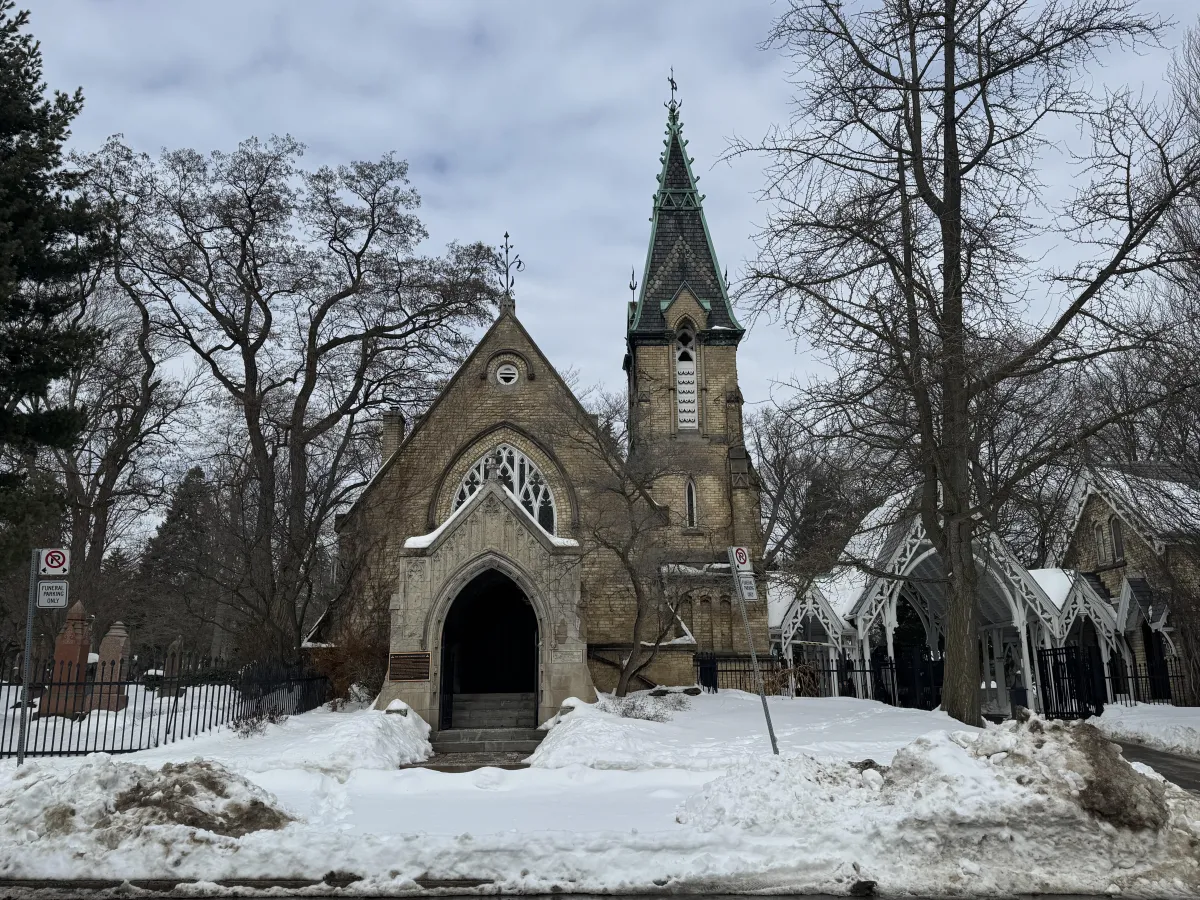
Beneath the Trees Lies Toronto’s Untold Beginning
In the quiet heart of a bustling neighborhood lies a place where Toronto’s earliest legends, rebels, founders, and forgotten citizens still keep watch. At first glance, it looks like just another patch of green — but step inside its wrought-iron gates and you enter a Victorian world frozen in time.
Here, elaborate Gothic mausoleums rise between ancient maples. Weathered limestone angels lean into the wind. Narrow pathways twist past memorials to soldiers, reformers, abolitionists, and pioneers who shaped the city long before glass towers defined its skyline.
It feels almost unreal: a peaceful “silent city” hidden among modern streets, waiting for curious visitors to wander through its stories.
This is one of Toronto’s most atmospheric historic sites — a place few tourists visit, yet one that reveals more about the city than any museum.

Photo Courtesy: True City Tourism
How the Silent City Came to Be
By the mid-1800s, Toronto was growing fast — and not always gracefully. The population was swelling, industries were expanding, and outbreaks of disease were common. Burial grounds clustered near churches in the city core were becoming overcrowded, unsanitary, and increasingly controversial. Reformers began calling for something radical at the time: a purpose-built cemetery outside the city, designed not just for burial, but for reflection, beauty, and public space.
In 1850, city planners approved the creation of a new kind of cemetery — one inspired by the Victorian “garden cemetery” movement sweeping Europe and North America. These cemeteries were meant to be peaceful, landscaped environments, blending mourning with nature and architectural elegance. Three years later, in 1853, the Silent City officially opened its gates.
From the start, this was never meant to be an ordinary burial ground.
The layout followed romantic Victorian ideals: winding paths instead of rigid grids, gentle hills rather than flat plots, and dramatic views overlooking the river valley below. Trees were intentionally planted to mature over decades, ensuring future generations would experience the same sense of calm and permanence.
Architecturally, the site embraced the Gothic Revival style popular in the 19th century. Pointed arches, carved stone crosses, angels, obelisks, and mausoleums echoed medieval Europe, reinforcing ideas of eternity, memory, and reverence. Many families spared no expense — commissioning monuments that rivaled small chapels in scale and detail.
But what truly set this place apart was who was buried here.
This cemetery became the final resting place for Toronto’s reformers, politicians, journalists, educators, and abolitionists — people who challenged authority, shaped public opinion, and helped define the moral direction of a young city. Unlike older churchyards, this was a space open to diverse beliefs, progressive thinkers, and those pushing Toronto toward modernity.
In a way, the Silent City wasn’t just built to house the dead — it was built to tell the story of a city finding its identity.
The People Who Built (and Challenged) Toronto
Walking through the Silent City feels less like visiting a cemetery and more like flipping through the most dramatic chapters of Toronto’s early history. The names etched into stone belong not just to citizens, but to rebels, reformers, and visionaries who helped shape the city’s political, social, and moral foundations.
Rebels and Reformers
Among the most notable figures laid to rest here are leaders tied to the Upper Canada Rebellion of 1837 — men who openly challenged colonial authority and fought for responsible government. At the time, their ideas were considered dangerous. Today, they’re recognized as instrumental voices in Canada’s democratic evolution.
Their presence gives the cemetery a quiet defiance. These weren’t passive figures of history — they were agitators, journalists, organizers, and thinkers who pushed Toronto to become more than a rigid colonial outpost.
Abolitionists and Social Progressives
The Silent City also became the final home for abolitionists and allies of the Underground Railroad. During the 19th century, Toronto was a crucial destination for people escaping enslavement, and several individuals buried here played active roles in advocating for freedom, education, and civil rights.
These stories are rarely told on typical city tours — yet here they are, carved into headstones, tucked beneath towering trees. The cemetery quietly preserves a legacy of moral courage and humanitarian action that helped define Toronto’s reputation as a refuge.
Builders of Culture and Public Life
Beyond politics and activism, many of Toronto’s early educators, journalists, architects, and artists are buried here. Editors who shaped public opinion. Teachers who helped formalize education. Civic leaders who designed the city’s early institutions.
What unites them is influence. Though their lives ended more than a century ago, their ideas echo through the schools, laws, neighborhoods, and cultural norms that still shape the city today.
Section 4 — Victorian Storytelling in Stone
The Silent City is as much an outdoor museum as it is a resting place. Every path, monument, and carving was designed to tell a story without words, following the deeply symbolic traditions of Victorian-era burial art.
Gothic Architecture With Purpose

Photo Courtesy: Spade & The Grave
The most striking feature is the dominance of Gothic Revival architecture. Pointed arches, spires, and chapel-like mausoleums rise from the landscape, inspired by medieval European churches. In the Victorian imagination, Gothic design symbolized eternity, spirituality, and the connection between heaven and earth.
These structures weren’t meant to intimidate — they were meant to comfort. Their vertical lines drew the eye upward, subtly reinforcing the idea of transcendence beyond death.
Symbols You’ll See Everywhere
Look closely at the headstones and mausoleums, and you’ll notice recurring motifs — each one intentional:
Weeping angels symbolizing grief and divine guardianship
Broken columns representing lives cut short
Ivy carvings signifying memory and eternal life
Clasped hands symbolizing farewell or reunion in the afterlife
Obelisks reflecting permanence, strength, and remembrance
To Victorian visitors, these symbols were immediately understood. Today, they add a layer of mystery — inviting modern visitors to decode the silent language of stone.
A Landscape Designed to Be Felt
Unlike rigid grid-style cemeteries, the Silent City was designed to feel romantic and immersive. Winding pathways slow your pace. Trees frame monuments instead of exposing them. Hills rise and fall gently, revealing new scenes with every turn.
In the 19th century, families treated cemeteries like public parks. They walked, reflected, sketched, and picnicked among the monuments. This place wasn’t morbid — it was contemplative, poetic, and deeply human.
Visiting Today: What to Know Before You Go
Visiting the Silent City is less about checking off sights and more about how you move through the space. A little intention goes a long way in making the experience meaningful.
Best Times to Visit
Early morning is ideal. The light filters softly through the trees, the paths are quiet, and the space feels almost suspended in time.
Late afternoon offers long shadows and a golden glow on the stonework — especially striking in fall.
Autumn is the most atmospheric season, when leaves carpet the paths and the Victorian monuments feel especially cinematic.
How to Explore
Take it slow. This isn’t a place to rush. Wander without a strict route and let the paths guide you.
Pause often. Many of the most striking monuments are slightly set back, partially hidden by trees or elevation.
Read the names. Even unfamiliar ones add depth — dates, inscriptions, and epitaphs reveal personal stories in just a few words.
Etiquette & Respect
This is an active burial site. Keep voices low and phones on silent.
Photography is allowed, but avoid intrusive behavior or staged shoots.
Stay on marked paths and avoid touching fragile monuments. Many stones are over 150 years old.
What to Bring
Comfortable walking shoes — the paths are uneven and gently sloped.
A camera or notebook — many visitors find themselves wanting to document details or reflections.
A light jacket — the shaded areas can feel noticeably cooler, even on warm days.
A Different Kind of Stop
This isn’t a “tourist attraction” in the traditional sense. There are no gift shops, no queues, no performances. And that’s exactly why it works. The Silent City offers something increasingly rare: space to think.
It’s a place where history isn’t displayed — it’s felt.


