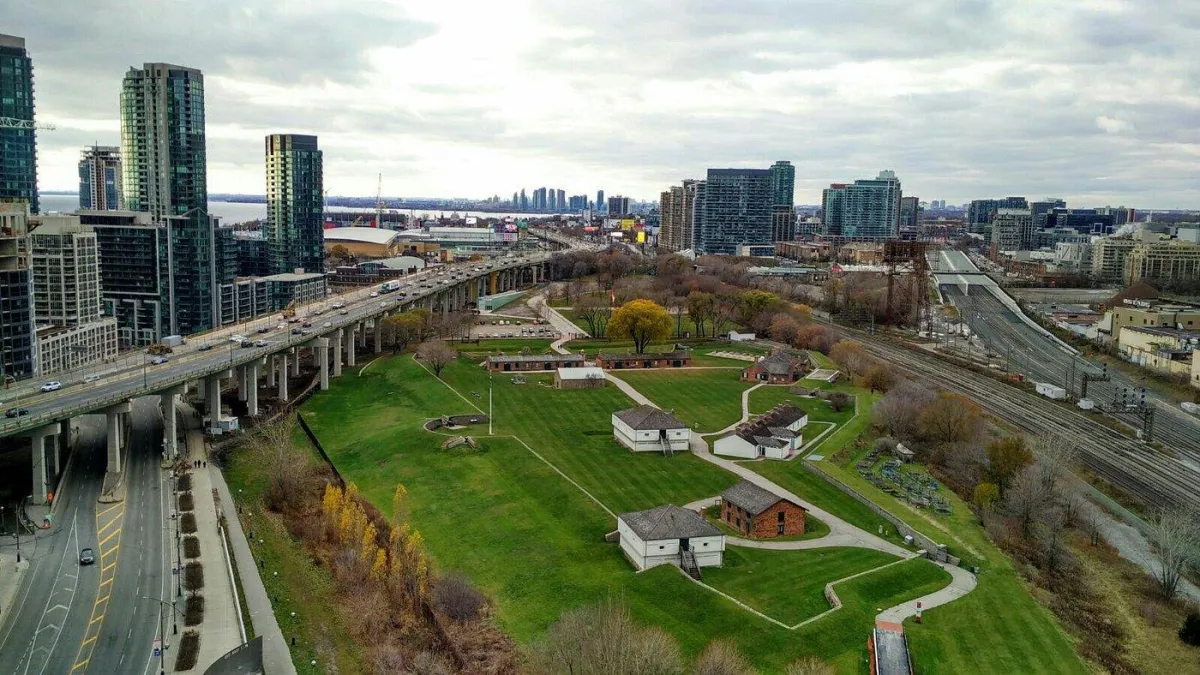
Why Fort York Deserves a Spot on Your Toronto Itinerary
When most travelers picture Toronto, they think of the CN Tower piercing the skyline, vibrant shopping in Yorkville, or the colorful chaos of Kensington Market. But tucked just west of downtown sits a site that tells the city’s oldest and most dramatic stories: Fort York National Historic Site.
At first glance, it might seem like just another collection of old barracks and cannons. But step inside, and you’ll uncover the battlefield where Toronto — then called York — fought for survival during the War of 1812. You’ll walk through Canada’s largest collection of original War of 1812 buildings, hear echoes of cannon fire, and discover how this quiet patch of land shaped the city you see today.
More than a relic, Fort York is a living museum — hosting reenactments, exhibits, and cultural events that bring history to life. It’s not just about the past; it’s about experiencing Toronto’s journey from a vulnerable settlement to a thriving metropolis.

The Origins of Fort York
Fort York came into being in 1793, when Lieutenant Governor John Graves Simcoe relocated the capital of Upper Canada from Newark (present-day Niagara-on-the-Lake) to a safer, more defensible position on the north shore of Lake Ontario. Newark was too exposed to American attack, sitting directly across the Niagara River. By contrast, York — still a quiet, heavily forested area — offered natural protection, a deep-water harbor, and plenty of land to build upon.
The initial fortifications were humble: wooden palisades, earthworks, and small blockhouses perched near the mouth of Garrison Creek. But they served a critical purpose: to safeguard British interests, protect the small but growing settlement, and assert control over the region.
At the time, York was barely a town. Roads were rough tracks cut through thick forests, and buildings were few. But the presence of the fort transformed the settlement into something more permanent. Soldiers stationed at Fort York built infrastructure that supported civilian life — maintaining supply lines, keeping order, and even assisting with road construction like Yonge Street, one of Toronto’s earliest thoroughfares.
Fort York quickly became the beating heart of early Toronto. It wasn’t just a military outpost; it was a symbol of stability in a volatile frontier. For settlers, the fort represented safety and continuity. For the British, it was a statement of power — a clear signal to both the United States and Indigenous nations that Britain intended to hold this land.
By the turn of the 19th century, Fort York had already expanded beyond its modest beginnings, with new barracks, storehouses, and defensive works. These early efforts would be put to the ultimate test during the War of 1812, when York’s fate — and the fort’s role in Canadian history — would be sealed in fire.
Timeline of Change: From Battlefield to Landmark
⚔️ The War of 1812 and the Battle of York (1813)
The most pivotal moment in Fort York’s history came on April 27, 1813, when American forces launched a major assault on York. Roughly 1,700 U.S. troops stormed ashore west of the fort, overwhelming the smaller British and Indigenous defense. As the Americans advanced, the retreating British detonated the fort’s powder magazine, triggering a massive explosion that killed over 250 American soldiers and officers.
Despite this desperate act, the Americans occupied York for six days, looting supplies, burning public buildings — including the Legislative Assembly — and leaving the settlement scarred. The battle was a turning point: though the Americans eventually withdrew, Fort York became a symbol of Canadian resilience and a rallying point for rebuilding.
🛠️ Reconstruction and Expansion (1814–1830s)
In the aftermath, Fort York was quickly rebuilt. Stronger defenses, stone structures, and new barracks replaced the earlier wooden ones. During this period, the fort became the centerpiece of a military garrison that would shape Toronto’s growth. Soldiers patrolled the waterfront, guarded supply lines, and trained in drills that became part of the city’s daily rhythm.
🏰 Decline of Military Use (Mid–Late 1800s)
By the mid-19th century, as Toronto expanded, the fort’s strategic importance waned. Advances in military technology made its walls less effective, and the growing city pressed in on all sides. While soldiers remained stationed there, Fort York was increasingly overshadowed by the bustling metropolis developing around it.
🏛️ Preservation and Transformation (20th Century)
By the early 1900s, Fort York was at risk of being swallowed by urban growth. But local historians and preservationists fought to protect it. In 1923, it was declared a National Historic Site, recognizing its central role in Canadian history. Restoration efforts preserved its barracks, blockhouses, and bastions, making it a rare surviving example of an early 19th-century fort in North America.
Today, Fort York isn’t just a reminder of the War of 1812 — it’s a living landmark. From cannon firings to food festivals, it has transformed into a cultural hub where history meets modern Toronto life.

What You’ll See Today at Fort York
Step through the gates of Fort York today, and you’ll find yourself surrounded by the largest collection of original War of 1812-era buildings in Canada. The atmosphere is remarkably immersive: wooden barracks, stone magazines, and grassy ramparts give you a direct window into Toronto’s early days. But this isn’t just a static museum — it’s a place where history breathes.
🏛️ Historic Buildings & Exhibits
Soldiers’ Barracks & Mess Rooms – See where British soldiers ate, slept, and lived day-to-day life in the early 19th century. The preserved interiors show just how rugged garrison life could be.
The Officers’ Quarters – A glimpse into the more comfortable, refined side of military life, with period furniture and artifacts.
The Stone Powder Magazine – Built in 1814 after the American attack, this structure was designed to safely house gunpowder and munitions — a stark reminder of the fort’s defensive role.
Exhibits & Artifacts – From military uniforms and muskets to interactive displays, the museum inside the fort helps visitors understand the human stories behind the battles.
🎭 Reenactments and Living History
Costumed interpreters often bring the past to life with musket demonstrations, guided tours, and reenacted drills on the parade ground. Hearing a musket fire echo through downtown Toronto is an unforgettable reminder of the city’s roots.
🎶 Cultural Events & Festivals
Fort York has embraced its role as a modern cultural space. Throughout the year, it hosts everything from food festivals and music concerts to Indigenous heritage events. The contrast is striking — modern Toronto gatherings set against 19th-century ramparts.
🌿 Green Space in the City
Beyond the walls, the surrounding grounds offer a rare stretch of open green space, perfect for picnics or quiet reflection. It’s a tranquil pause in the middle of a busy city — much like Allan Gardens, but with a heavier dose of history.

Tips for Visiting Fort York
Before you plan your trip, here are some essentials that will help you make the most of your visit:
🕒 Best Times to Visit
Spring & Summer – The fort comes alive with reenactments, tours, and outdoor festivals. Warm weather makes it easier to explore both the grounds and the surrounding green space.
Fall – Cooler weather and fewer crowds make autumn a great time for a quieter visit.
Winter – While some activities are limited, the historic buildings remain open, and the snowy backdrop adds a striking atmosphere.
🎟️ Admission & Hours
Admission is generally $10–15 for adults and discounted for youth, seniors, and children.
Open most days of the year, but hours vary by season — always check the official site before heading out.
🚶 How to Get There
By Transit: Just a 10-minute walk from Bathurst or Fort York-Esplanade streetcar stops.
By Car: Paid parking is available nearby, but spots can fill quickly during events.
By Foot/Bike: The fort sits on the edge of the Martin Goodman Trail, making it easy to combine with a waterfront walk or ride.
💡 Insider Tips
Plan your visit around a reenactment day — the live musket demonstrations and costumed tours make the fort truly come alive.
Check the events calendar: food festivals like Taste of Toronto and cultural events often transform the grounds into something completely different.
Bring comfortable shoes: while the fort isn’t huge, the uneven historic surfaces and grassy grounds can be tricky in sandals or heels.
Don’t miss the panoramic views of downtown Toronto from the fort’s ramparts — it’s one of the best “then and now” perspectives in the city.
Nearby Eats & Stays
After exploring Fort York, you’ll likely want to refuel or rest nearby. Luckily, the surrounding King-Spadina and Liberty Village neighborhoods offer a mix of casual eats, gourmet dining, and stylish accommodations.
🍴 Where to Eat
Weslodge Saloon – A short walk east, this lively gastropub serves elevated comfort food and craft cocktails in a historic tavern-style setting.
Gusto 54 – Just minutes away, this Italian-inspired restaurant offers wood-fired pizzas, handmade pastas, and a sleek dining room perfect for dinner after a day of exploring.
Lady Marmalade – Located a bit further in the St. Lawrence Market area, this cozy spot is famous for breakfast and brunch classics with a gourmet twist.
🛏️ Where to Stay
The Broadview Hotel – A boutique hotel housed in a historic building, offering modern rooms, a rooftop bar, and easy access to Fort York and downtown attractions.
Le Germain Hotel Toronto Mercer – Sleek, upscale, and centrally located, it’s a great option for travelers who want luxury without straying far from downtown.
The Westin Harbour Castle – For a waterfront stay, this hotel offers spacious rooms, lake views, and amenities for families or business travelers.
🌟 Local Traveler Tip
Combine your Fort York visit with a meal in Liberty Village or a waterfront stroll along the Martin Goodman Trail. It’s an easy way to see both historical and modern sides of Toronto in one outing.

Why Fort York Should Be on Your Toronto Itinerary
Toronto is full of iconic sights, from the soaring CN Tower to the eclectic streets of Kensington Market. But Fort York offers something different: a direct connection to Canada’s past. It’s where the city’s early settlers defended their home, where pivotal moments in the War of 1812 unfolded, and where the foundations of modern Toronto were quietly laid.
Visiting Fort York isn’t just about looking at old buildings or reading plaques — it’s about experiencing history in action. Reenactments, interactive exhibits, and cultural events turn the fort into a living museum that appeals to families, history buffs, and curious travelers alike.
From the cannon-lined ramparts to the restored barracks, every corner tells a story — one of resilience, ingenuity, and the growth of a city that would become a global hub. Paired with nearby eateries and boutique accommodations, a visit to Fort York can easily become the centerpiece of a day or weekend exploring Toronto.
✨ Don’t just walk past history — step inside, explore, and let Fort York show you Toronto as you’ve never seen it before.


